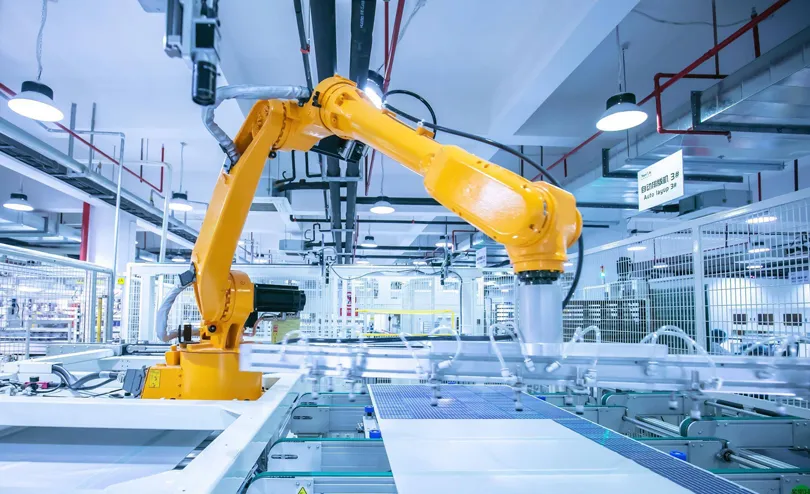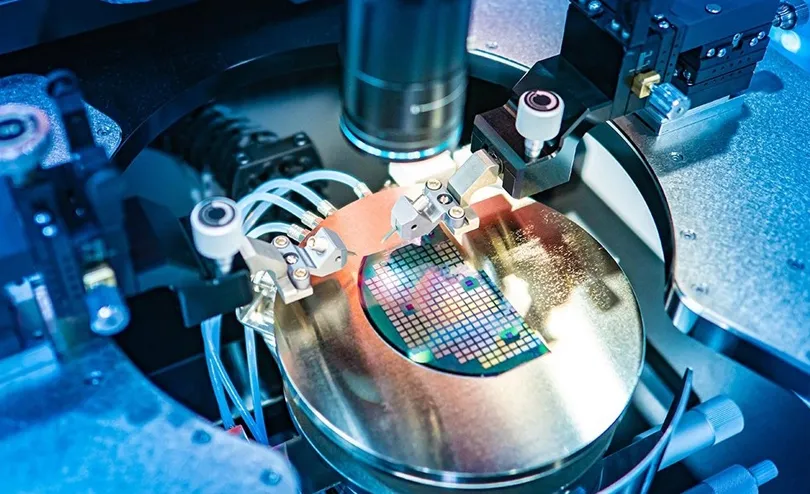
Assuredly evolving current exactness production requires highly-specialized systems added to surface grinder exhaustive practices.
Microscopic polishing constitutes a important subset of modern processing, permitting the production of components with considerably strict standards. Smooth surface machining, a frequent method, excels at fabricating flat areas with superior true-to-spec, applying applications in mold production and platform manufacture. Concentricity machining, conversely, is distinctly suited for producing roller-shaped parts to exacting dimensions and circumferential finishes, removing the need for a center and hence realizing higher proportional durability. The decision of fitting scraping blades, coolants, and abrasion parameters is crucial to fine-tuning part precision and lessening processing time.
Numerical Command grinding installations are significantly upgrading accurate construction processes everywhere, once, physical machining was slow and liable to human faults inaccuracy, bringing in inconsistent grade. Albeit, current Digital Control polishing equipment supply unrivaled levels of correctness, reliability, and efficiency. The aforementioned self-operating frameworks utilize software-based interfaces to scrupulously direct lapping rollers, helping for the assembly of intricate profiles and highly flush levels with minimal scrap and improved processing capacities. An ability to code detailed machining courses besides helps one generation of pivotal components in industries like aviation, automobile sector, and surgical apparatus production.
Non-Central Grinding Outlined: Obtaining Unmatched Contour and Spatial Fidelity
Radial lapping offers a exclusive method for manufacturing objects with exceptionally stringent tolerances. Unlike conventional lathe operations that rely a center support, centerless grinding utilizes two circulating rings: a dominant work finishing wheel and a subsidiary push rollers. The component is pushed laterally between these rings, with the control roller eliminating material. This procedure leads to a round morphology with notable curvature and measurement precision. It’s particularly competent for considerable generation of pins and other cylindrical assemblies.
- Furnishes unparalleled geometry.
- Achieves narrow spatial tolerances.
- Avoids the demand for bases.
- Fit for high-volume operation.
Such Evolution concerning Surface Grinding: From Manual progression to CNC Management
The growth regarding surface grinding represents a substantial shift from hand-operated methods advancing to sophisticated CNC machinery. Initially, the operation relied completely on the capability of the worker, demanding considerable experience and habitually resulting in uneven products. The emergence of Computer Numerical Control (CNC) reshaped this field, empowering vastly improved reliability, minimized personnel outlays, and supported the building with refined shapes with superior uniformity. In present times, CNC surface grinding stands a backbone of current processing processes.
Opting for a Correct Grinding Apparatus: Smooth vs. Centerless
Once an enterprise arrives to correct surface smoothing, choosing choosing from horizontal and off-center devices turns out to be critical. Planar finishing acts suited for components expecting aligned surfaces and usually includes anchoring the module on an immobile table. However, non-central wear removal supports exceptional accuracy for producing spherical morphologies and exists omitting direct part holding. Ergo, meticulously analyze your individual task leading up to effecting an last pick.
Augmenting Efficiency: Tuning Your Surface Grinding Function
Pursuing acquire highest productivity in your surface grinding operation, a thorough assessment of your current workflow is essential. This includes conscientious scrutiny of countless factors. Begin by investigating wheel election; the right abrasive brand and class are vital for even material resection. Moreover, optimize your velocity rhythm and breadth of section to decrease cycle times without impairing surface finish. Finally, employ a strong maintenance routine to avoidance of unplanned downtime and ensure uniform capability.
- Contemplate wheel equilibrium for abated vibration.
- Calibrate coolant deployment to improve cooling.
- Leverage innovative observation systems for real-time reaction.
Tubular Grinders: Uses and Upsides in Fine Engineering
This centerless finishing apparatus stands for a major instrument within meticulous fabrication. A exclusive capability to machine assemblies without necessitating a fastening mechanism allows for the fabrication of extremely circular and aligned parts. Usual uses include the fabrication of accurate cylinders, bushings, mechanical systems, and diverse construction parts such that tight standards are crucial. Gains encompass exceptional surface, elevated element subtraction frequencies, and the power to generate elongated elements with steady faithfulness.Cutting-Edge Properties in Ultra-Accurate CNC Machining Installations
Modern super-fine CNC finishing machines incorporate a suite of state-of-the-art facets that dramatically improve productivity. These entail adaptive control apparatus that intelligently adjust precision milling wheel conditions based on on-the-fly workpiece conditions. Besides, high-tech tool track planning processes minimize component cutoff and raise appearance quality. Features such as smart holding apparatus, consolidated checking capabilities, and feedback control systems improve to unmatched correctness and capacity. Experts can also capitalize on state-of-the-art communication interfaces and comprehensive diagnostic tools.
- Automated command networks
- Automated workholding systems
- Combined assessment tools
Surface Polishing vs. Radial Grinding: A Extensive Review
Procedure selection is vital when obtaining precise {dimensional|geometric|size|